


Table of Contents
If you have been thinking about dental implants but are not quite sure what the process actually looks like from start to finish, you are not alone. Most patients who come in for their first implant consultation have a general idea of what the end result will be, a permanent, natural-looking tooth or set of teeth, but very little understanding of the journey that gets them there. The steps involved, the timeline, the appointments, the healing phases, and what they will feel and experience along the way.
This guide walks you through the complete dental implant journey, from your very first consultation all the way through to the moment your final smile is revealed. It is written for patients who want a clear, honest, and detailed picture of what getting dental implants in Agoura Hills actually involves, so that when you sit down for your consultation you already understand the process and can focus your questions on what matters most to your specific situation.
Stage 1: The Initial Consultation
Every implant journey begins with a consultation and this first appointment is arguably the most important one in the entire process. It is where your dentist gets to understand your specific situation, assess whether implants are the right solution for your needs, and begin building the treatment plan that will guide everything that follows.
At a thorough implant consultation you can expect several things to happen. Your dentist will take a detailed medical and dental history, asking about any health conditions, medications, or lifestyle factors that could affect the healing process. They will perform a comprehensive examination of your teeth, gums, and bite. And they will take advanced 3D CBCT imaging of your jaw, a three-dimensional scan that gives them a precise picture of your bone volume, bone density, and the location of critical anatomical structures including nerves and sinus cavities.
This imaging is not just a formality. It is the foundation of safe and precise implant planning. Without it a dentist is working with an incomplete picture of the jaw that significantly limits their ability to plan the procedure accurately. Always confirm that 3D imaging is included in your implant consultation before attending.
During the consultation your dentist will also discuss your treatment options in detail. For patients replacing a single tooth, a single implant and crown is typically the most straightforward solution. For patients with multiple missing teeth, multiple implants or an implant-supported bridge may be appropriate. And for patients who need a full arch of teeth replaced, full arch solutions like All-on-4 dental implants in Agoura Hills offer a permanent fixed result using just four strategically placed implants.
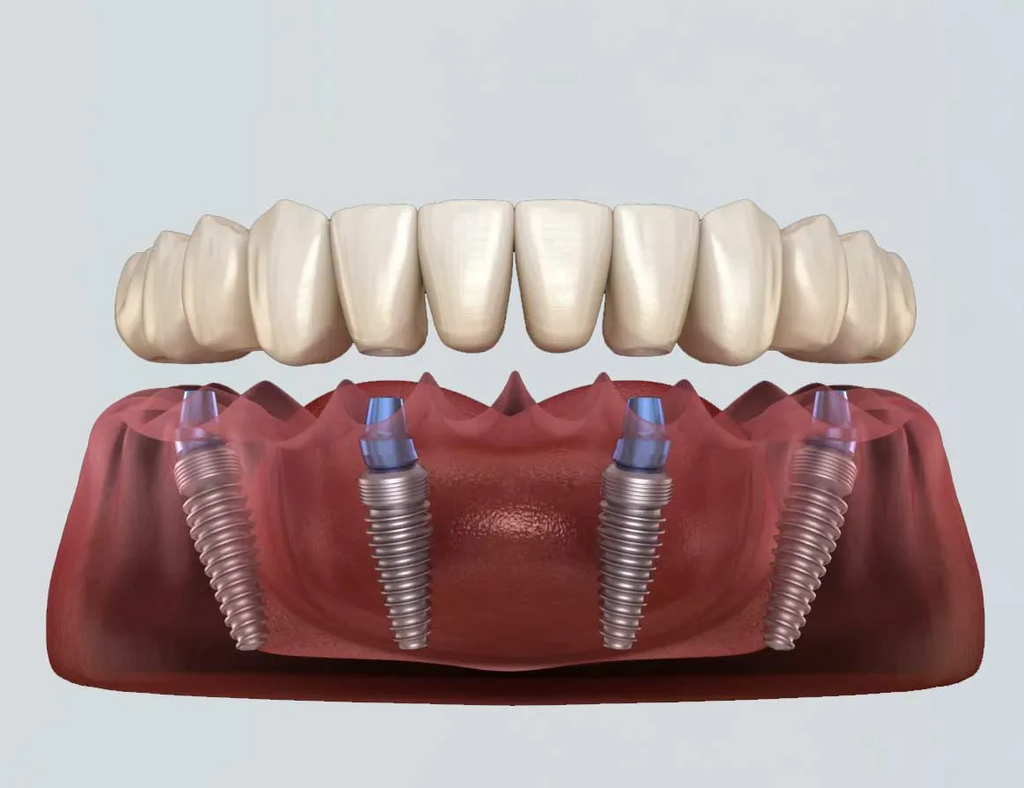
Stage 2: Treatment Planning
Once the consultation is complete and your dentist has a full picture of your bone structure and dental situation, the detailed treatment planning phase begins. This is where everything that will happen during surgery is mapped out in advance, the precise position of each implant, the angle and depth of placement, and how the final restoration will be supported.
For complex cases involving multiple implants or full arch restorations, computer-guided surgery may be used, a technology that translates the digital treatment plan directly into the surgical procedure using a precisely fabricated surgical guide. This level of pre-surgical planning significantly improves accuracy and predictability and is one of the most important factors in delivering consistently excellent implant outcomes.
If any preparatory procedures are needed before implants can be placed, such as tooth extractions, bone grafting to rebuild insufficient bone volume, or a sinus lift to create additional bone height in the upper jaw, these are identified and planned at this stage. Preparatory procedures add time to the overall treatment timeline but they are essential for creating the solid biological foundation that gives your implants the best possible chance of long-term success.
Stage 3: Preparatory Procedures (Where Needed)
Not every patient needs preparatory work before implant placement but for those who do this stage is a critical part of the journey. The most common preparatory procedures are bone grafting and sinus lifts.
Bone loss is extremely common among patients who have had missing teeth for any significant period. When a tooth is lost the jawbone in that area no longer receives the stimulation it needs to maintain its volume and density, and it begins to resorb over time. If insufficient bone remains to support an implant a bone graft is needed to rebuild the site before placement can proceed.
A bone graft involves adding bone material to the deficient area and allowing it to integrate and mature over a healing period of typically three to six months. Once the graft has consolidated the site is ready for implant placement. While this adds time to the overall treatment journey the result is a solid biological foundation that supports the implant just as effectively as naturally sufficient bone.
For patients needing implants in the upper jaw a sinus lift may also be required. This procedure gently lifts the sinus membrane and adds bone graft material beneath it, creating additional bone height in an area where the sinus floor has encroached following tooth loss. Once healed this provides the depth needed for safe and stable upper jaw implant placement.
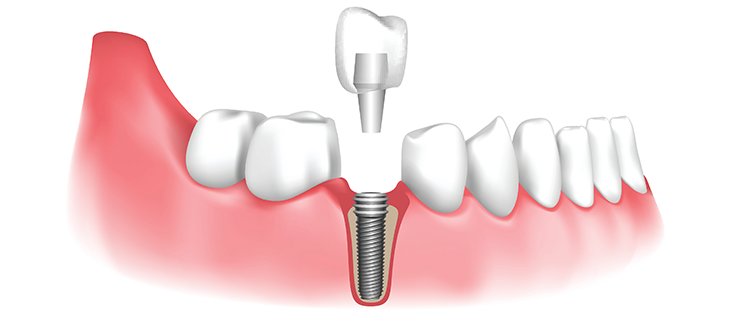
Stage 4: Implant Placement Surgery
The implant placement procedure is the central event of the entire treatment journey, and for most patients it is far more manageable than they anticipated. The procedure is performed under local anesthesia and sedation options including intravenous sedation are available for patients who want to be completely relaxed and largely unaware throughout.
During surgery a small incision is made in the gum tissue to expose the bone beneath. A precisely controlled osteotomy, a small channel in the bone, is prepared using a series of drills with careful irrigation to prevent overheating. The titanium implant post is then inserted into the prepared site and the gum tissue is closed around it.
For most patients the procedure takes between 30 minutes and two hours depending on the number of implants being placed and the complexity of the case. Full arch restorations typically take two to four hours per arch. Most patients describe the post-operative experience as involving mild to moderate discomfort for the first few days, well managed with prescribed pain relief, and returning to normal daily activities within three to five days.
In cases where same day loading is appropriate a temporary restoration may be attached to the implants on the same day as surgery, giving patients a functional smile immediately. Whether same day loading is suitable depends on the primary stability achieved during placement and is assessed on a case by case basis.
Stage 5: Osseointegration and Healing
Once the implants are placed the healing phase begins, and this is where the real biological magic of dental implant treatment happens. Osseointegration is the process by which the titanium implant post fuses permanently with the surrounding jawbone, forming a bond that is extraordinarily strong and stable and that provides the same kind of mechanical anchorage that natural tooth roots do.
This process typically takes between three and six months to complete. During this time you will attend regular check-up appointments so your dentist can monitor your healing progress and confirm that the implants are integrating as expected. These appointments are brief and straightforward, your dentist will assess the implant site clinically and in some cases take imaging to verify bone density around the implant.
Patients are advised to follow a soft food diet during the early healing period to avoid placing excessive stress on the implants before osseointegration is established. As healing progresses the dietary restrictions gradually ease and most patients are able to eat a normal diet well before their final restoration is placed.
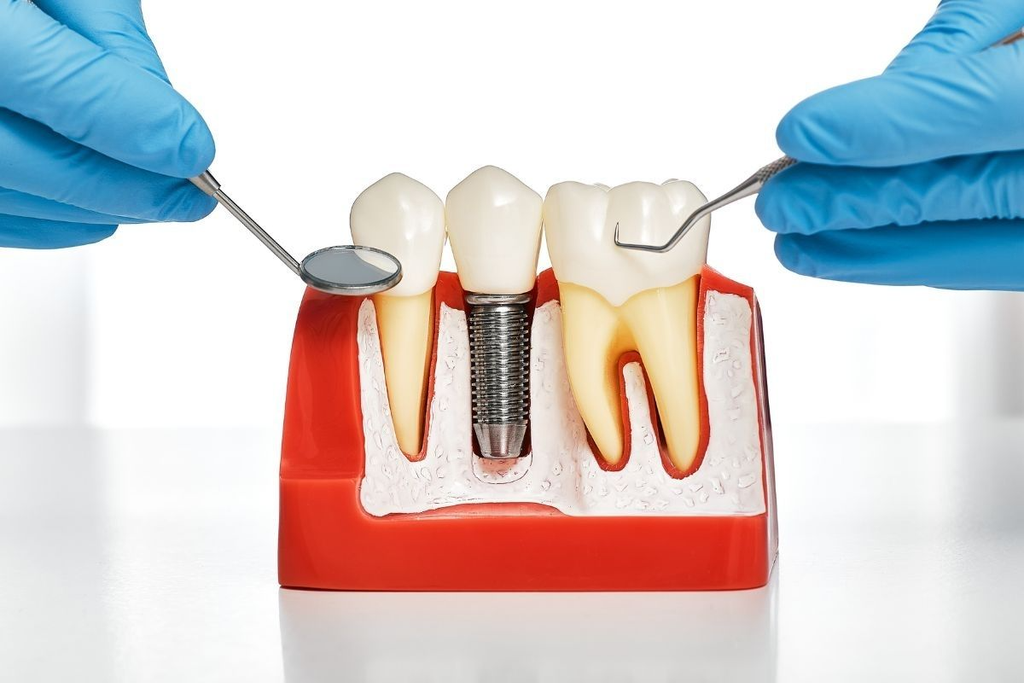
Stage 6: Abutment Placement
Once osseointegration is confirmed the next step is the placement of the abutment, a small connector piece that attaches to the top of the implant and provides the interface between the implant post and the final crown or restoration. In some cases the abutment is placed at the same time as the implant. In others it is placed as a separate minor procedure once healing is complete.
The abutment placement is a minor and straightforward procedure typically performed under local anesthesia. Once in place the gum tissue is allowed to heal around the abutment for a short period before impressions or digital scans are taken for the fabrication of the final restoration.
Stage 7: Final Restoration Placement
This is the moment every implant patient has been waiting for, the placement of the final permanent restoration. Whether it is a single crown, a multi-tooth bridge, or a complete full arch restoration for full mouth dental implants, the final result is custom-fabricated to your exact specifications in terms of tooth shade, shape, size, and surface texture.
Your dentist will fit the restoration, check the bite carefully, and make any minor adjustments needed to ensure a perfect, comfortable fit. Once everything is confirmed the restoration is permanently secured and the treatment is complete.
For most patients the placement of the final restoration is a genuinely emotional moment. The journey from consultation to this point has involved multiple appointments, a healing period, and a significant investment of time and resources, and the final result makes all of it worthwhile. Patients consistently describe the experience of seeing their completed implant smile for the first time as one of the most positive moments of their dental journey.
The Bottom Line
The dental implant journey from consultation to final smile typically takes between three months for straightforward single tooth cases and nine to twelve months for more complex full arch cases involving preparatory procedures. Every stage of the process serves a specific purpose and contributes to an outcome that is designed to last a lifetime.
Understanding the journey in advance is one of the best things you can do to prepare yourself for a positive implant experience. When you know what to expect at each stage the process feels manageable, purposeful, and genuinely exciting rather than intimidating.
If you are in Agoura Hills, Westlake Village, Calabasas, Thousand Oaks, Oak Park, or Newbury Park and are ready to start your implant journey, Agoura Advanced Dentistry offers free consultations with an experienced implant dentist in Agoura Hills. Come in with your questions and leave with a clear, personalised picture of what your implant journey would look like from start to finish. Find us on Google Maps and come in today. Get Directions
If you are in Agoura Hills, Westlake Village, Calabasas, Thousand Oaks, Oak Park, or Newbury Park and are ready to start your implant journey, Agoura Advanced Dentistry offers free consultations with an experienced implant dentist in Agoura Hills. Come in with your questions and leave with a clear, personalised picture of what your implant journey would look like from start to finish. Find us on Google Maps and come in today. Get Directions
Frequently Asked Questions
How long does the dental implant process take from start to finish?
The timeline varies depending on the complexity of your case. A straightforward single tooth implant without preparatory procedures typically takes three to six months from consultation to final crown. Cases involving bone grafting, sinus lifts, or full arch restorations may take nine to twelve months or longer.
Is dental implant surgery painful?
The procedure is performed under local anesthesia so you will not feel pain during surgery. Sedation options are available for patients who want to be completely relaxed. Post-operative discomfort is typically mild to moderate and resolves within a few days with prescribed pain relief.
How many appointments will I need for dental implants?
The number of appointments depends on your specific treatment plan. A straightforward single implant case typically involves a consultation, a surgical appointment, a healing check-up, and a final restoration appointment. More complex cases involve additional appointments for preparatory procedures and ongoing monitoring during the healing period.
What can I eat during the healing period after implant surgery?
A soft food diet is recommended for the first few weeks following surgery. Smoothies, soups, scrambled eggs, mashed potatoes, soft fish, and yogurt all work well. As healing progresses, your diet gradually returns to normal.
How long do dental implants last?
With proper care and regular professional maintenance, dental implants can last 20 years or more, often a lifetime. The titanium implant post is designed to be a permanent fixture in the jawbone, and the final restoration is built to withstand decades of normal function when maintained appropriately.

